
The Future of Risk Management in the Ride-Share Economy
The ride-share economy has completely transformed how the world moves. What started as a novel way to hitch a ride has evolved into a global transit powerhouse. However, this rapid growth introduces unique, fast-moving liabilities. Traditional insurance models and static safety policies simply cannot keep pace with a sector defined by millions of independent contractors, fluctuating regional regulations, and real-time data.
As the Ride Share industry matures, the frameworks keeping drivers, passengers, and platforms safe must evolve too. Here is a look at how technology, regulation, and shifting mobility trends are shaping the future of risk management in the ride-share economy.
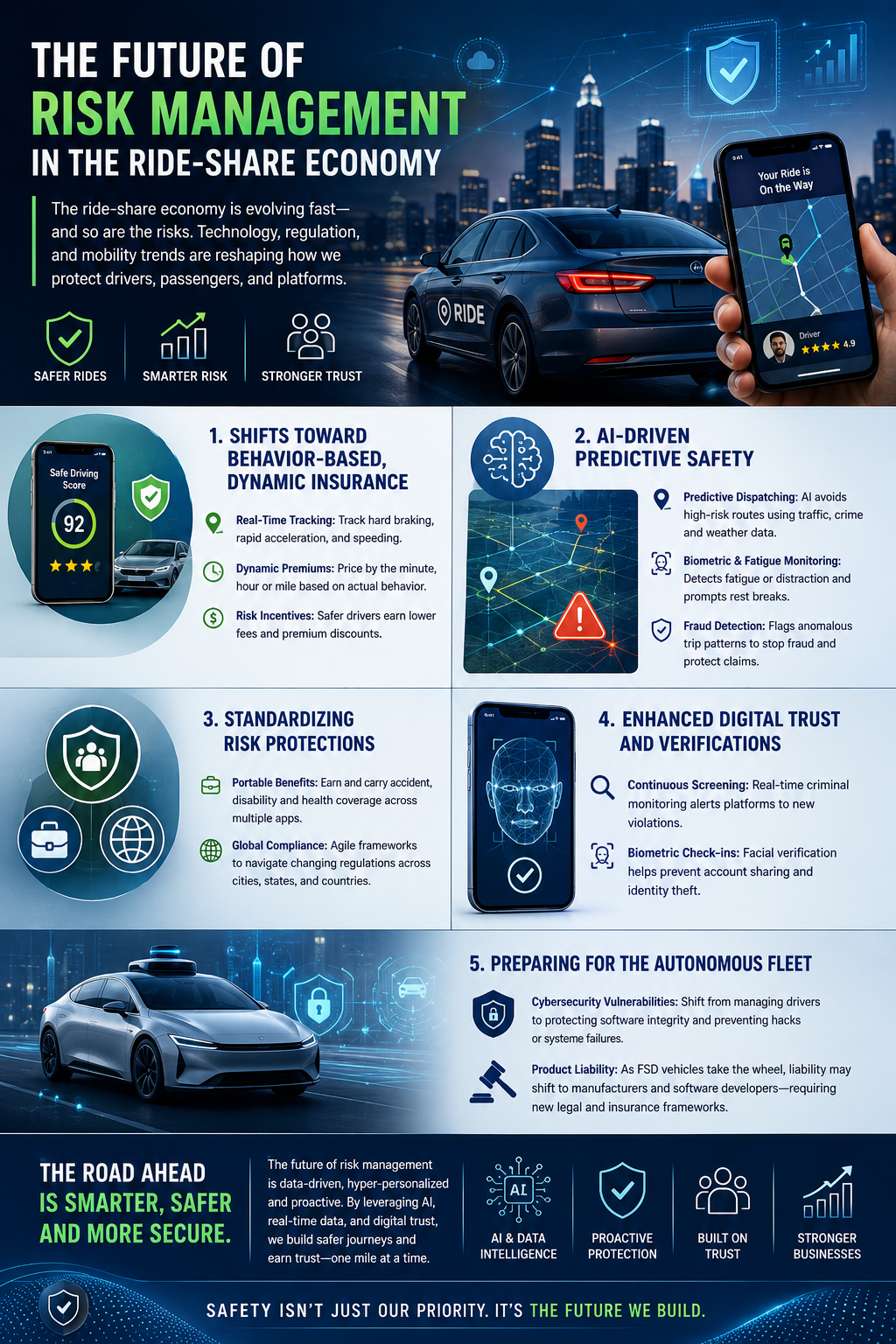
Shifts Toward Behavior-Based, Dynamic Insurance
Historically, commercial auto insurance relied on static demographics like age, geography, tand driving history. The future belongs to Usage-Based Insurance (UBI).
-
- Real-Time Tracking: Ride-share apps increasingly monitor smartphone gyroscopes and GPS data to track hard braking, rapid acceleration, and speeding.
-
- Dynamic Premiums: Future risk models will price insurance by the minute, hour or mile, adjusting premiums dynamically based on actual driver behavior.
-
- Risk Incentives: Safer drivers will enjoy lower platform fees or premium discounts, shifting risk management from a reactive penalty system to a proactive incentive structure.
AI-Driven Predictive Safety
Passive safety ratings are no longer enough. The next frontier uses Artificial Intelligence (AI) to predict and prevent incidents before they happen.
-
- Predictive Dispatching: AI algorithms can cross-reference real-time traffic data, historical crime maps, and weather conditions to steer drivers away from high-risk routes.
-
- Biometric & Fatigue Monitoring: In-app facial recognition and gaze-tracking software will detect signs of driver fatigue or distraction, prompting mandatory rest breaks.
- Fraud Detection: Advanced machine learning models can instantly flag anomalous trip patterns, protecting platforms and drivers from fraudulent insurance claims.
Standardizing Risk Protections
-
- Portable Benefits: Expect to see a rise in portable benefit models, allowing independent contractors to accumulate accident, disability, and health coverage tied to their work volume across multiple apps.
-
- Global Compliance: Risk management teams will need highly agile compliance frameworks to navigate patchwork legislation that varies wildly between cities, states, and countries.
Enhanced Digital Trust and Verifications
Physical safety is deeply intertwined with digital security. As cyber threats escalate, securing the digital perimeter is vital to managing physical ride-share risks.
-
- Continuous Screening: The days of an annual background check are fading. The future relies on continuous criminal monitoring that alerts platforms to new violations in real time.
- Biometric Check-ins: To prevent account sharing and identity theft, both drivers and passengers may soon rely on biometric verification (like facial scans) before a trip can initiate.
Preparing for the Autonomous Fleet
The ultimate evolution of the ride-share economy is the integration of Full Self Driving (FSD) vehicles. While self-driving fleets will eliminate most of human error—the root cause of most accidents—they will introduce entirely new risk profiles.
-
- Cybersecurity Vulnerabilities: Fleet operators will pivot from managing driver behavior to managing software integrity, protecting vehicles from hacking or system failures.
- Product Liability: When a Full Self Driving (FSD) vehicle crashes, some liability can shift from the operator to the manufacturer and software developer. Risk managers must consider the legal and insurance frameworks to handle these new accident liabilities.
Conclusion
The future of risk management in the ride-share economy is data-driven, hyper-personalized, and proactive. By leveraging AI, real-time data, and rigid digital screening, platforms can build an ecosystem where safety is seamlessly engineered into every mile. The companies that successfully anticipate these shifts will not only protect their bottom line—they will win the trust of the millions of people who rely on them every day.
Popular Post
Sep 10, 2026
Sep 01, 2026
Apr 16, 2026
Leave a Reply