
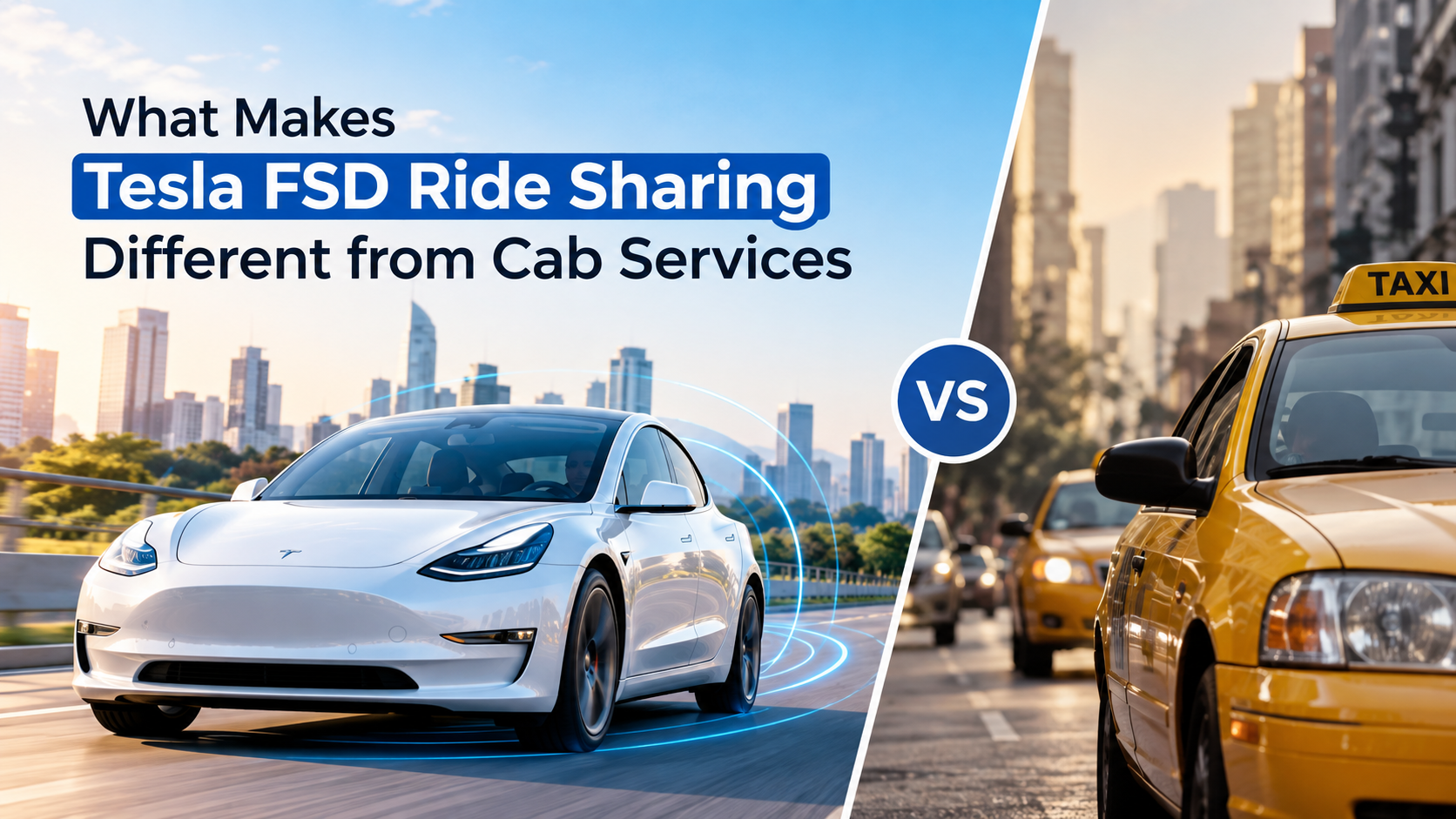
What Makes Tesla FSD Ride Sharing Different from Cab Services
Highlights:
- Membership-based access provides scheduled Tesla reservations instead of requesting a cab for every journey.
- Members drive the Tesla themselves, supporting flexible travel for errands, appointments, and personal trips.
- FSD technology assists with navigation, lane changes, turns, and other driving tasks under supervision.
- Shared vehicle costs can reduce the financial responsibilities associated with individual car ownership.
Get In Touch Call: 480.205.7291
Getting around town traditionally means choosing between owning a car, booking a cab, or using public transportation. Traditional cab services are typically designed to get a car with a driver when you need a ride. It provides convenient point-to-point travel; these are usually built around individual trips, driver availability, and on-demand bookings.
On the other hand, Tesla FSD ride-sharing service takes a different approach. It combines shared vehicle access, membership, and advanced driving technology. Instead of requesting a driver every time you need to travel, you can reserve a Tesla for a set period and use it for your own transportation needs. In this blog, we will explore the key differences between Tesla FSD ride-sharing and cabs.
Key Differences between Tesla FSD Ride-Sharing Service and Cabs
Here you go!
Membership-Based Not On-Demand
The way your transportation is accessed is one of the biggest differences. Cabs provide an on-demand service, which means you request a ride when you need to travel. An FSD ride-sharing service works through a membership model. The club is formed with 20 or 40 members, and access typically begins when the club reaches capacity and activates.
You Drive the Tesla
A professional driver takes you from one destination to another with a traditional cab. In ride-sharing, you are responsible for the Tesla during your reserved period. You can use these vehicles for appointments, errands, airport trips, social events, and other personal transportation needs. The best part is that, rather than being required to share a ride with strangers, you can travel with anyone you choose, usually your family members and friends.
FSD Technology
FSD technology is the major feature of Tesla’s ride-sharing service. You might wonder: How does Tesla FSD ride-sharing work? Well, it involves members accessing a Tesla equipped with FSD software, which can assist with navigation, lane changes, turns, and other driving tasks. But this technology currently operates under the supervision of the driver. That is why it should not be treated as a replacement for a driver’s responsibility.
More Consistent Access
The availability of a cab depends on demand, drivers, location, and the pricing at the time you request a ride. But a membership-based system is structured differently. You can make vehicle reservations in predictable four-hour blocks. It makes planning regular transportation easier for you with recurring appointments, activities, or other commitments.
Shared Ownership Costs
When you own a vehicle, you need to take responsibility for payments, insurance, maintenance, charging or fuel, and depreciation. For a cab service, the price is calculated based on the distance, number of seats, vehicle condition, and many other factors. But Tesla FSD ride-sharing service distributes certain vehicle-related costs among club members, including shared vehicle expenses and FSD subscription costs.
Fulfil Personal Transportation Needs
If you need regular access to a car but you do not want full ownership, this model offers a suitable way to approach transportation. It is considered the best alternative to owning a car in 2026 and ideal for people who value shared access to premium FSD vehicles without taking on the entire cost of individual ownership.
Tesla FSD ride-sharing offers a different approach to personal transportation by combining membership, scheduled vehicle access, shared costs, and FSD technology. There is no need to rely on traditional cab services. A membership in our ride-share system is undoubtedly a smarter and safer way to move. Contact us to get access to premium vehicles without taking on the entire cost of individual ownership.
FAQs:
-
How does Tesla FSD ride-sharing differ from traditional cabs?
Tesla FSD ride-sharing provides members with reserved vehicle access, while cabs provide driver-operated, on-demand transportation.
-
Who drives the Tesla in an FSD ride-sharing service?
The member drives the Tesla during their reserved period and remains responsible for supervising FSD technology.
-
Can Tesla FSD ride-sharing help reduce vehicle ownership costs?
Yes, shared expenses among members can reduce certain costs associated with owning and maintaining an individual vehicle.
Popular Post
Sep 10, 2026
Sep 01, 2026
Apr 16, 2026
Leave a Reply